
Light Commercial Vehicle TPMS:
A Supplier Guide for
Van and LCV Fleets
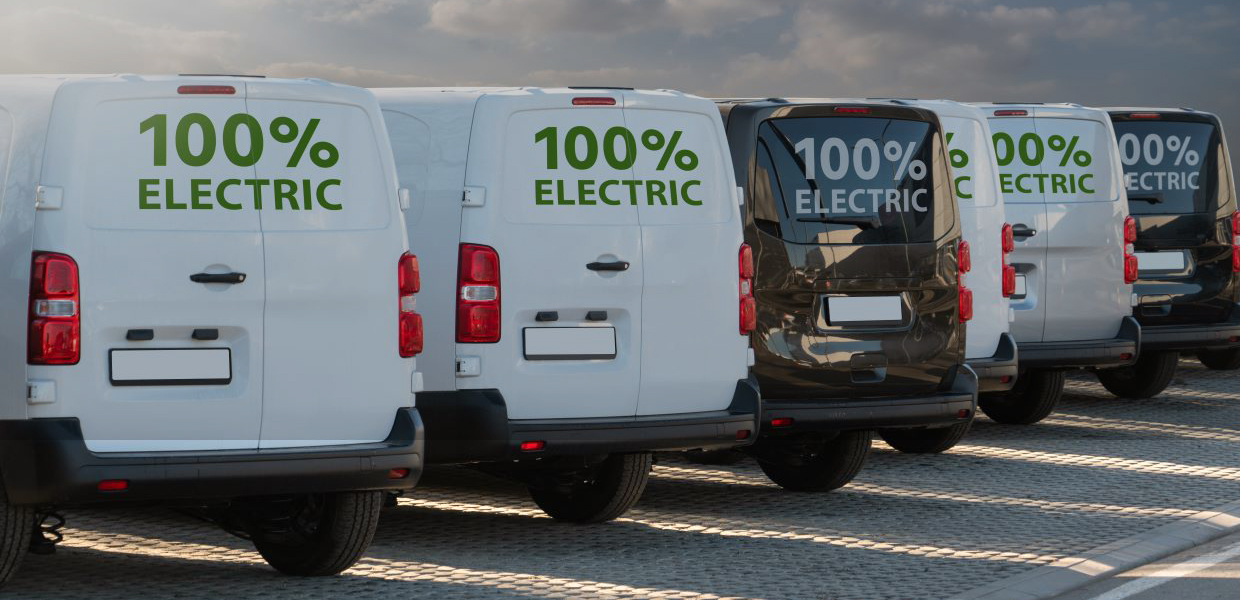
Light commercial vehicles are the most numerous category in the commercial vehicle parc across both Europe and North America. From parcel delivery vans and refrigerated food distribution trucks to utility service vehicles and small business fleets, the LCV segment represents tens of millions of units in active operation — and a correspondingly large opportunity for distributors with the right product and supplier relationships. For wholesale buyers building a tyre safety accessories range, sourcing light commercial vehicle TPMS wholesale products from a certified manufacturer is a category decision with strong repeat-purchase dynamics and a buyer base that is rapidly standardising on professional-grade equipment.
This guide addresses the LCV TPMS market from a B2B perspective — covering the scale and structure of the opportunity, the technical specifications that define a commercially appropriate product, and the wholesale and OEM sourcing criteria that distributors and fleet procurement teams should apply. Grundig Motion manufactures commercial TPMS systems for the full range of commercial vehicle applications, from light commercial vans through to 24-wheel articulated HGVs, with CE and FCC certification across all product lines and OEM and white-label supply available for distributors building branded programmes.
The LCV segment has characteristics that make it particularly attractive for distributors entering the commercial TPMS category. The vehicle population is large, the buyer base is predominantly fleet-operated rather than individually owned, and the sensor replacement cycle creates a predictable revenue stream that extends well beyond the initial system sale. Understanding the structure of the opportunity is the foundation of a sourcing decision that builds sustainable category revenue rather than one-off transactions. A complete overview of the Grundig Motion commercial TPMS manufacturing range for LCV and wider commercial applications is available for wholesale buyers.
The LCV Market: Scale, Growth, and Wholesale Opportunity
The light commercial vehicle segment is defined by a gross vehicle weight of up to 3.5 tonnes and covers the full range of vans, pickups, and small box trucks used in commercial and service operations. In European terms, this includes Transit-class vans, Sprinter-size vehicles, and compact city delivery vehicles. In North America, the equivalent category spans full-size vans, light pickups, and cargo vehicles in the Class 1 through Class 3 range.
The structural driver of LCV fleet growth is the expansion of e-commerce and last-mile delivery logistics. As consumer expectations around delivery speed have intensified, parcel carriers, grocery delivery operators, and returns logistics companies have all expanded their LCV fleets significantly. This is not a cyclical trend — it reflects a permanent shift in retail supply chain structure that has added millions of commercial van units to European and North American roads over the past five years, with more growth projected through the remainder of the decade.
E-Commerce & Parcel Delivery
The fastest-growing LCV fleet segment. Large carriers operate standardised multi-thousand vehicle fleets where accessory procurement is handled at group level and applied across all units.
Food & Beverage Distribution
Refrigerated and ambient distribution fleets with high daily mileage. Tyre failure carries cargo spoilage risk on top of vehicle downtime — TPMS ROI is particularly strong.
Utility & Field Service
Telecoms, energy, and infrastructure service fleets. Vehicles operate across diverse road surfaces with high annual mileage. Fleet managers specify safety equipment at the programme level.
Small Business & Trade
Construction, plumbing, electrical, and HVAC operators running small fleets of 2–20 vehicles. Purchase decisions are made by owner-operators who respond to cost and reliability arguments.
For wholesale buyers, the critical characteristic of these segments is that purchasing is increasingly centralised. Large parcel carriers do not buy TPMS sensors from retail shelves — they specify them as fleet accessories through procurement agreements and apply them across their full vehicle estate. Distributors who have the product specification, certification documentation, and supply chain reliability to satisfy a fleet procurement process are positioned for volume orders rather than individual unit sales.
Technical Specifications for LCV TPMS Systems
The technical requirements for LCV TPMS are more straightforward than heavy commercial vehicle applications, but they are not identical to passenger car specifications. Getting the specification right determines whether the product performs correctly across the full range of LCV applications — and whether it generates warranty claims or customer satisfaction.
Pressure Range
Standard passenger car tyres operate at 2 to 3 BAR. LCV tyres carry significantly more load and operate at correspondingly higher pressures. A fully loaded Transit-class van may require 3.5 to 5.5 BAR on the rear axle. Larger LCVs approaching 3.5 tonnes GVW can require 6 to 8 BAR at the rear under full payload. A TPMS system sourced for LCV applications should cover at least 1 to 8 BAR to serve the full range without gaps — sensors with a 4 BAR ceiling exclude the upper half of the LCV pressure range entirely.
Sensor Configuration
Standard LCVs operate on four wheels, making the 4-sensor configuration the core LCV TPMS SKU. Extended-wheelbase variants — common in high-roof cargo, ambulance conversion, and mobile workshop applications — are still 4-wheel vehicles and do not require additional sensors, though the extended vehicle length may benefit from a signal repeater if the receiver is mounted forward in the cab. A system architecture where the 4-sensor LCV kit uses the same receiver as 6-sensor and 8-sensor commercial configurations gives distributors the flexibility to serve wider vehicle ranges from a single product family.

Certification Requirements
CE certification is a legal requirement for LCV TPMS products distributed across the EU and UK. For wholesale buyers building a European product offer, the declaration of conformity must cover the complete system — sensors, receiver, and any included accessories — and should be available as an original document on request. For North American distribution, FCC certification covers the 315 MHz wireless frequency used for vehicle electronics. Both certifications should be current and specific to the product model being sourced, not carried over from earlier product generations.
IP67 Protection
LCV sensors in commercial service face regular high-pressure washing at fleet depots, exposure to road spray and winter road treatments, and in some applications, direct mud and dust exposure. IP67 protection — dust-tight and capable of withstanding temporary water immersion — is the minimum standard for sensors in this environment. Sensors rated below this threshold generate disproportionate warranty claims in high-pressure wash environments, which are standard maintenance practice for most commercial van fleets.
Why LCV Fleets Are a Repeat-Purchase Category
The financial case for investing in LCV TPMS as a wholesale category is stronger than the initial system sale suggests. External cap sensors have a typical battery life of one to three years under standard commercial operating conditions. For a distributor who places 100 units into a fleet operator’s vehicle estate today, that is a replacement sensor order of 400 sensors — four per vehicle — arriving within two to three years. If the product performed correctly and the supplier relationship was reliable, that replacement order returns to the same distributor.
Wholesale revenue model: A 4-sensor LCV kit sold at €80–€120 wholesale generates a sensor replacement order of equivalent or higher value within 24 months, plus potential receiver upgrades as fleet operators expand or standardise. Fleet accounts that specify a product across their full vehicle estate generate compounding volume on each replacement cycle. The initial order is the acquisition cost; the replacement cycle is the sustainable revenue.
Fleet expansion adds another layer. The LCV segment is growing, and operators who are satisfied with their current TPMS supplier extend the same specification to new vehicle additions as a matter of operational simplicity. A distributor who supplies a 50-vehicle fleet today is in a strong position to supply the same fleet when it reaches 75 or 100 vehicles — provided the product and service level have been consistent.
Manufacturing and Wholesale Requirements for LCV TPMS
For wholesale buyers evaluating LCV TPMS suppliers, the product specification is the starting point. The supply chain characteristics that determine whether the category generates sustainable revenue or customer service problems are equally important to verify before committing to a supplier relationship.
- CE certification covering the complete system: Sensors and receiver certified together, not independently. The declaration of conformity should be available as an original document and should reference the specific EU directive and harmonised standard applicable to the product.
- FCC certification for North American supply: 315 MHz frequency certification covering sensors, not just the display unit. Current certification number verifiable against FCC database records.
- Pressure range validated to 8 BAR minimum: Confirmed at the upper end of the range, not just at standard test pressures. Accuracy of ±0.1 BAR should be maintained across the full 1 to 8 BAR operating range.
- IP67 sensor protection: Confirmed at the sensor housing level. The receiver unit’s IP rating does not cover the sensors — verify both independently.
- Single receiver platform across sensor counts: A supplier whose 4-sensor LCV kit is compatible with 6-sensor and 8-sensor commercial configurations on the same receiver allows distributors to serve a wider vehicle range with simplified inventory and training.
- OEM and white-label supply capability: Custom packaging, branded hardware, and localised documentation at commercially viable minimum order quantities. For European distributors, German and English-language documentation should be available as standard. For North American distributors, English-language documentation with FCC certification references.
- Volume pricing structure: Clear tier pricing at 50, 100, and 500 unit levels allows distributors to present competitive fleet pricing without renegotiating on every order. A supplier without transparent volume tiers creates friction in the fleet sales process.
LCV TPMS — Wholesale & OEM
The Grundig Motion commercial TPMS range covers light commercial van applications through to 24-wheel HGV configurations under a unified engineering standard. For LCV applications, the range provides 4-sensor coverage with a 1 to 8 BAR pressure range, IP67 sensor protection, ±0.1 BAR accuracy, and CE and FCC certification. OEM and white-label supply is available for distributors building branded TPMS programmes. Contact the wholesale team at grundig-motion.com for MOQ, lead time, and customisation terms.
Building LCV TPMS into Your Wholesale Catalogue
The minimum viable stock position for an LCV TPMS category covers the 4-sensor kit as the primary SKU, individual replacement sensors for the battery replacement cycle, and any signal repeater units relevant to extended-wheelbase applications in the target market. Distributors who also carry 6-sensor and 8-sensor configurations from the same receiver platform — for medium-duty trucks and DRW applications — extend their commercial TPMS category to a significantly larger vehicle population without adding supplier complexity.
For European distributors, the German market represents the single largest LCV opportunity on the continent. Certification documentation in German and professional installation guides in the local language are baseline requirements for credible market entry. For UK distributors, the post-Brexit regulatory environment means CE certification remains valid for market access alongside the transitional UKCA framework — a supplier who can advise on the current compliance status for UK distribution is a more reliable partner than one who cannot.
For North American distributors, the large parcel carrier and last-mile logistics segment represents the highest-volume opportunity but also the most demanding procurement process. These buyers require certified products, enterprise warranty terms, and volume pricing structures that can be committed to in writing before the first order is placed. A supplier who can meet these requirements consistently is a strategic asset — one who cannot creates fulfilment gaps at exactly the point where volume accounts are being established. For the full Grundig Motion LCV and commercial TPMS wholesale range, including technical specifications and volume pricing enquiries, contact the trade team directly.
Summary: The LCV TPMS Wholesale Opportunity
The light commercial vehicle segment combines the largest vehicle population in commercial transport with structural growth drivers — e-commerce logistics, fleet standardisation, and increasing procurement professionalisation — that make it a durable wholesale category rather than a cyclical opportunity. The repeat-purchase dynamics are strong, the buyer base is increasingly fleet-operated and procurement-managed, and the technical specification is clear and consistently applied across the market.
Source CE and FCC certified products with pressure ranges validated to 8 BAR minimum and IP67 protection at sensor level. Work with a manufacturer who can support OEM supply if branded programmes are relevant to your customer base. Build volume tier pricing into the commercial framework before approaching fleet accounts. These are the supplier and category management decisions that convert the LCV TPMS opportunity from a transactional SKU into a recurring revenue category.
LCV TPMS for Van Fleet and Wholesale Supply?
CE and FCC certified. OEM and white-label options for distributors. Volume pricing available for fleet accounts.