
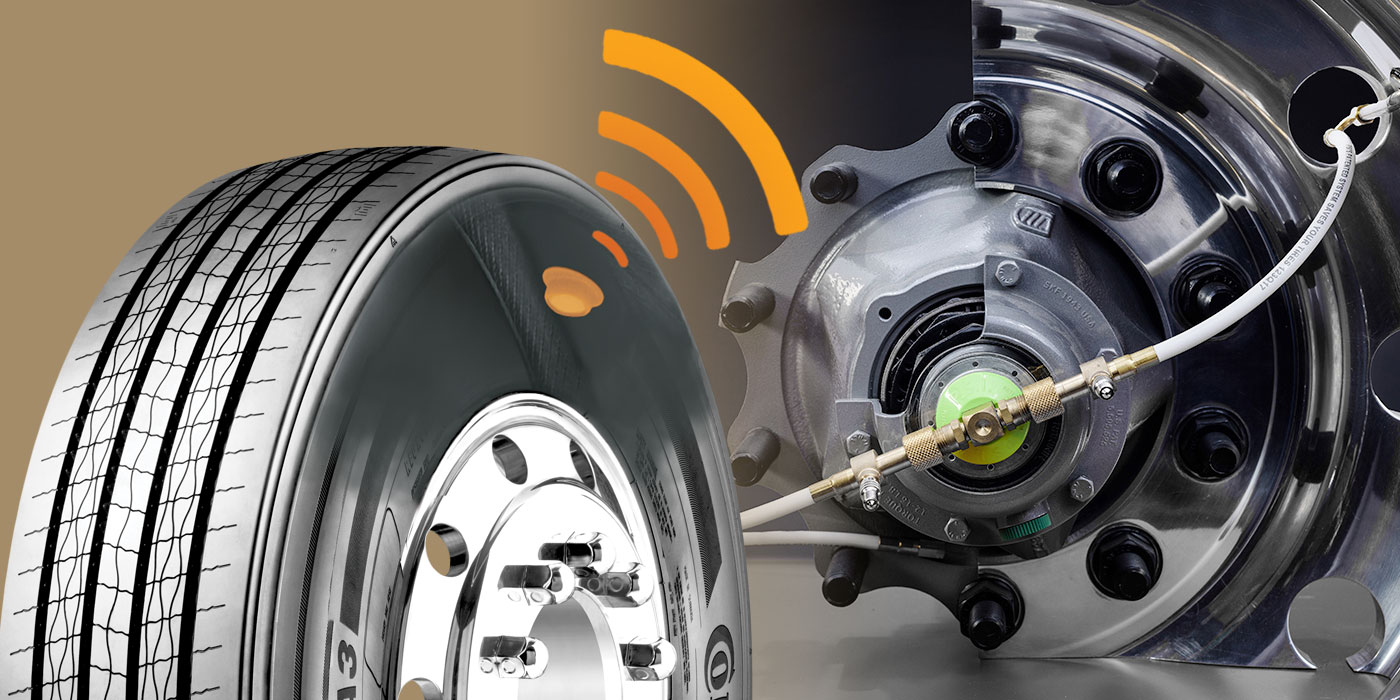
Internal vs External TPMS Sensors:
Which Is Better for
Commercial Vehicles?
Internal or external — it is the first question any procurement team or distributor faces when specifying TPMS for a commercial vehicle fleet, and it is one that does not have a single correct answer. The right choice depends on the vehicle type, the operating environment, the fleet’s maintenance model, and the end customer’s priorities. For B2B buyers building a credible internal TPMS sensor wholesale product range, understanding the technical distinction between these two sensor types — and knowing when to recommend each — is the foundation of a product offer that earns repeat business from informed fleet buyers.
This guide addresses the internal vs external TPMS decision from a commercial vehicle perspective, covering the technical differences, the application scenarios where each format outperforms the other, and the wholesale sourcing criteria that distributors should apply when evaluating suppliers. Grundig Motion manufactures commercial TPMS systems covering both internal and external sensor configurations, with the current product range focused on 6-wheel trucks, travel trailers, and motorhomes. Contact the team for OEM and bulk order enquiries.
The decision between internal and external sensors is not primarily a cost decision — though cost is a factor. It is an application decision. A distributor who recommends external sensors to a fleet operator who washes their vehicles at high pressure three times a week will generate warranty claims. A distributor who recommends internal sensors to an RV owner who wants a self-install product will lose the sale. Getting this right requires understanding both formats well enough to match the commercial TPMS product to the customer’s actual operating context.
The Core Difference Between Internal and External TPMS Sensors
Both internal and external TPMS sensors perform the same function: measuring tyre pressure and temperature and transmitting that data wirelessly to a cab receiver. The difference is entirely in how and where they are installed — and those installation differences have cascading effects on durability, maintenance, theft risk, and total cost of ownership.
External sensors — also called cap-type or valve cap sensors — thread directly onto the existing valve stem on the outside of the wheel. They replace the standard dust cap and require no tools and no tyre removal for installation. Internal sensors — also called in-valve or valve stem sensors — are mounted inside the wheel, typically by replacing the standard valve stem with a sensor-equipped alternative. This requires removing the tyre from the rim, which means a tyre shop or workshop fitting.
- Installation: Self-install, no tools required
- Accessibility: Fully accessible for battery replacement and sensor swap
- Theft risk: Higher — visible on valve stem
- Impact risk: Higher — exposed position
- Cost: Lower per unit
- Best for: RVs, travel trailers, light commercial vans, first-time TPMS buyers
- Installation: Requires tyre removal — tyre shop fitting
- Accessibility: Battery replacement requires tyre removal
- Theft risk: Zero — no external components
- Impact risk: Minimal — protected inside wheel
- Cost: Higher per unit
- Best for: Fleet vehicles, high-pressure wash environments, security-sensitive operations
When External Sensors Make More Sense
External cap-type sensors are the right choice when self-installation and easy maintenance are the primary priorities. For RV and travel trailer applications — where the owner may be fitting the system in a campsite car park without access to a workshop — external sensors are the practical default. The installation takes minutes, requires no specialised tools, and allows the customer to swap sensors or replace batteries without scheduling a tyre appointment.
For light commercial van fleets where vehicles are serviced at regular intervals by in-house maintenance teams, external sensors also make operational sense. The battery replacement process is straightforward and can be incorporated into a routine tyre pressure check without workshop downtime. For distributors supplying the RV accessory market or light commercial aftermarket, external sensors typically represent the higher-volume SKU because they serve a broader customer profile with a lower installation friction point.
External sensor caution for fleet buyers: External cap sensors are the most vulnerable TPMS format to theft. On a fleet vehicle parked on a public street overnight, cap sensors can be removed in seconds by anyone with basic knowledge of the system. For urban delivery fleets, high-theft-risk environments, or any vehicle where the sensors need to survive unsupervised overnight parking, external sensors create an unacceptable ongoing replacement cost that internal sensors eliminate entirely.
When Internal Sensors Are the Better Choice
Internal sensors become the appropriate choice as soon as any of the following conditions apply: the fleet washes vehicles at high pressure, the vehicles operate in environments where external components are at risk of mechanical impact, theft is a realistic operational concern, or the operator has a contracted tyre service arrangement that makes workshop installation a non-issue.
For 6-wheel commercial trucks — particularly those operating in construction, waste management, or agricultural logistics — internal sensors are significantly more durable in service. The outer tyre sidewall and rim environment on a working truck is harsh: kerb strikes, debris impacts, and high-pressure washing are routine. An external sensor in this environment has a shorter service life than the same sensor on a standard van, generating replacement costs that erode the initial price advantage over internal alternatives.

For fleet operators running vehicles under contracted maintenance agreements with tyre suppliers, the installation friction of internal sensors is largely eliminated. If a tyre service provider is already removing wheels on a scheduled basis, fitting internal sensors during that process adds minimal time and cost. In this context, the durability and security advantages of internal sensors make them the clear choice for any fleet with a professional maintenance programme in place.
Technical Comparison: Key Specifications Side by Side
| Specification | External (Cap-Type) | Internal (In-Valve) |
|---|---|---|
| Installation requirement | Self-install | Tyre shop required |
| Theft vulnerability | High (visible, removable) | Zero (fully internal) |
| Impact/damage risk | Moderate (exposed) | Minimal (protected) |
| Battery replacement | Simple (cap removal) | Requires tyre removal |
| High-pressure wash resistance | IP67 (external exposure) | IP67 (fully sealed) |
| Signal stability | Good | Excellent (shorter transmission path) |
| Wholesale unit cost | Lower | Higher |
| Long-term TCO (fleet) | Higher (theft/damage replacement) | Lower (fewer replacements) |
| Best application fit | RV, travel trailer, light van, self-install | Fleet trucks, high-wash, construction, urban delivery |
What This Means for B2B Buyers and Distributors
For wholesale buyers and distributors, the practical implication of the internal vs external distinction is straightforward: both formats should be stocked, and the sales conversation should lead with the customer’s application rather than the product. A distributor who defaults to recommending external sensors because they are lower cost will eventually generate a dissatisfied fleet customer whose sensors are being stolen or damaged. A distributor who positions internal sensors as the professional-grade option — and can explain why — earns the higher-margin sale and the repeat business that follows.
The inventory decision is simplified when both sensor types are sourced from a supplier whose product family uses the same receiver unit across internal and external configurations. This allows fleet operators with mixed vehicle types — some suited to external, some to internal — to standardise on a single display system regardless of which sensor format is fitted. It also allows distributors to cross-sell between formats without introducing a second supplier relationship or a second receiver platform into their customer base.
- Stock both formats from the same supplier platform: Ensures receiver compatibility across sensor types and simplifies fleet operator inventory management.
- Lead the sales conversation with application, not price: External is not “budget” and internal is not “premium” — they are different tools for different operating environments.
- Confirm IP67 at sensor level for both formats: High-pressure wash resistance is a requirement for commercial vehicle sensors in both configurations, not just internal.
- Understand fleet maintenance models before recommending: A fleet with contracted tyre services has no installation barrier to internal sensors. A fleet with in-house maintenance teams may prefer external for simplicity.
- Price internal sensors to reflect long-term TCO: The higher unit cost of internal sensors is offset by lower theft and damage replacement rates — an argument that resonates with fleet procurement buyers who track total cost of ownership.
Internal & External Sensor Range
Grundig Motion’s commercial vehicle TPMS range covers both internal and external sensor configurations for 6-wheel trucks, travel trailers, and motorhomes. CE and FCC certified, IP67 rated, ±0.1 BAR accuracy, −40°C to 125°C operating range. Additional commercial vehicle configurations are being added in coming months. Contact the commercial TPMS wholesale team for pricing, OEM enquiries, and bulk order terms.
Summary: Making the Right Choice for Your Customer Base
Internal and external TPMS sensors are not in competition — they serve different customer profiles and operating environments. External sensors belong in RV, travel trailer, and light commercial van applications where self-installation and easy battery replacement are operational priorities. Internal sensors belong in fleet truck applications, high-pressure wash environments, urban delivery operations, and any context where theft or mechanical damage creates ongoing replacement costs.
For wholesale buyers and distributors, the strongest commercial position is to stock both formats from a supplier whose platform supports them on a shared receiver system — and to have a clear enough understanding of the application differences to guide customers to the right product rather than defaulting to the lower-cost option. That is the sourcing and sales approach that builds durable fleet accounts rather than one-off transactions. For the full Grundig Motion commercial TPMS range covering both sensor formats, contact the trade team at grundig-motion.com for wholesale and OEM pricing.
Sourcing Internal & External TPMS for Commercial Fleets?
Both sensor formats available. CE and FCC certified. Bulk and OEM supply for B2B buyers across European and North American markets.