
In-Valve TPMS Sensors:
A Wholesale Sourcing Guide
for Automotive Distributors
In-valve TPMS sensors represent the higher-specification end of the tyre pressure monitoring market — and for automotive distributors serving professional fleet accounts, they are increasingly the expected product rather than the premium option. As fleet operators standardise on internal sensor configurations for the durability, security, and maintenance consistency advantages they provide, sourcing a reliable in-valve TPMS sensor wholesale supply has become a core category decision rather than a niche requirement for specialist distributors.
This guide addresses the in-valve TPMS market from a B2B distribution perspective — covering what defines this sensor type, the commercial vehicle applications where it is the preferred choice, the manufacturing standards that separate commercial-grade products from consumer-grade alternatives, and the wholesale sourcing framework that professional distributors should apply. Grundig Motion manufactures commercial TPMS systems for B2B buyers, with the current product range covering 6-wheel trucks, travel trailers, and motorhomes. OEM and bulk order enquiries are welcome — additional configurations are being added in coming months.
Understanding in-valve sensors well enough to sell them confidently requires more technical familiarity than external cap sensors — but that technical knowledge is also the competitive advantage that differentiates distributors who own the fleet account from those who compete on price. A distributor who can explain the commercial in-valve TPMS specification in terms of operating environment, battery management, and total cost of ownership will consistently outperform one who leads with unit price.
What Are In-Valve TPMS Sensors?
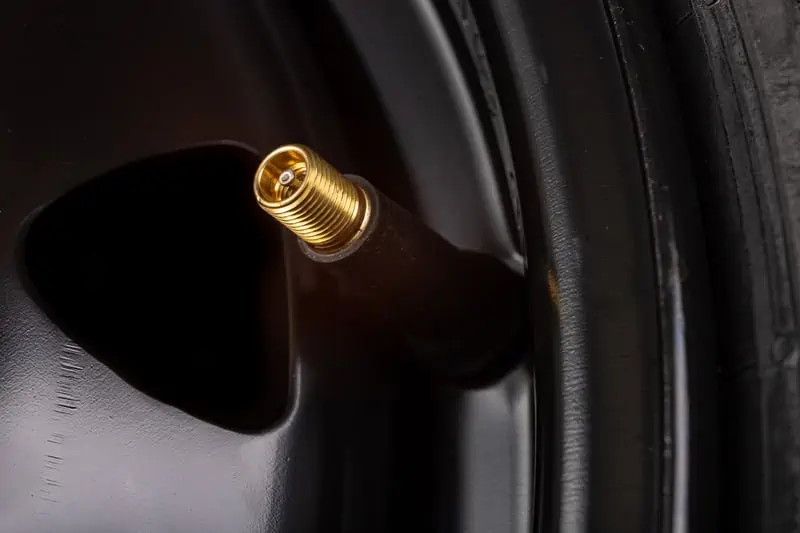
An in-valve TPMS sensor is a pressure and temperature monitoring unit that is mounted inside the wheel assembly, replacing or integrating with the standard tyre valve stem. Unlike external cap-type sensors that thread onto the outside of the valve, in-valve sensors are fully enclosed within the tyre-wheel interface — no components are visible or accessible from outside the wheel when the tyre is fitted.
The sensor assembly typically consists of a sensing element, a battery, a microprocessor, and a short-range wireless transmitter — all housed in a sealed unit that is either bonded to a metal valve stem or incorporated into a purpose-designed valve stem body. During normal operation, the sensor measures tyre pressure and temperature at defined intervals and transmits readings to the cab receiver unit via a low-frequency wireless signal. The driver receives continuous real-time data for all wheel positions without any manual intervention.
Key distinction for distributors: “In-valve” and “internal” are often used interchangeably in the trade, but the more precise term is in-valve — referring specifically to sensors integrated into or mounted on the valve stem assembly inside the wheel. Some internal sensor formats use a band mounting to the wheel rim rather than the valve stem. For commercial vehicle applications, in-valve mounting is generally preferred for installation simplicity and compatibility with standard wheel designs.
The primary reason professional fleet operators prefer in-valve sensors is the absence of external components. An external cap sensor is visible, accessible, and removable without tools — which means it is vulnerable to theft, accidental impact from kerbs and loading bay edges, and potential seal degradation under repeated high-pressure washing. An in-valve sensor in a correctly fitted tyre is as protected as the tyre itself. That protection is not a luxury for a commercial fleet vehicle — it is an operational reliability requirement.
In-Valve Sensor Applications in Commercial Vehicles
In-valve TPMS sensors are appropriate across a broad range of commercial vehicle types, but they are the clear choice in specific operating environments where the limitations of external sensors create unacceptable operational risk.
6-Wheel Commercial Trucks
Medium-duty trucks in logistics, construction, and waste management operate in environments with frequent kerb contact, debris, and high-pressure washing. In-valve sensors eliminate the damage and theft exposure that makes external sensors uneconomical on working trucks over a 3-year fleet horizon.
Light Commercial Vans (Fleet)
Urban delivery van fleets parked on public streets overnight face systematic cap sensor theft — a well-documented pattern in major European cities. Fleet operators switching to in-valve sensors eliminate this replacement cost entirely and improve system reliability metrics.
Dual Rear Wheel (DRW) Trucks
The inner rear wheel position on DRW configurations is particularly vulnerable to external sensor damage from road debris and tyre contact. In-valve sensors on inner rear positions eliminate this specific vulnerability while providing more accurate readings from the higher-heat inner position.
Travel Trailers & Premium RV
Higher-end RV owners and commercial rental fleet operators managing travel trailer units increasingly specify in-valve sensors for the clean aesthetic, tamper resistance, and reduced maintenance requirements versus cap sensors over a multi-year vehicle life cycle.
Manufacturing Standards That Define Quality In-Valve Sensors
The manufacturing specification for in-valve TPMS sensors follows the same framework as other commercial vehicle sensor types, with two parameters that deserve particular attention in the in-valve context: battery longevity and seal integrity.
Battery Life and Replacement Cycle
In-valve sensor batteries cannot be replaced without removing the tyre from the rim. This is the primary operational consideration that differentiates in-valve from external sensors — and it means battery longevity is more important for in-valve products than for external ones. A well-designed commercial in-valve sensor should achieve two to five years of battery life under normal operating conditions. At the shorter end of that range, battery replacement coincides conveniently with tyre replacement cycles for many fleet operators, which absorbs the workshop cost of sensor access into a maintenance visit that would be occurring anyway.
For distributors, battery life is a significant component of the total cost of ownership argument when comparing in-valve with external sensors. An external sensor that requires annual battery replacement at workshop rates across a 20-vehicle fleet creates a recurring cost line that does not exist for in-valve sensors on a three-year replacement cycle. Quantifying this difference for fleet procurement buyers is a more effective sales argument than discussing unit cost alone.
Pressure Range and Accuracy
In-valve sensors for commercial vehicle applications must cover the same pressure ranges as their external equivalents — typically 1 to 15 BAR for applications spanning light commercial vans through to 6-wheel medium-duty trucks. Accuracy of ±0.1 BAR is the standard that enables actionable early-warning alerts before pressure loss reaches safety-critical levels. A sensor accurate only to ±0.3 or ±0.5 BAR requires a significantly larger pressure differential before an alert triggers — which means the monitoring system responds to problems that have already developed rather than preventing them from developing.
Temperature Range and Seal Integrity
Commercial vehicle tyres in active service generate significant heat, particularly on drive axle positions under sustained load. In-valve sensors must maintain accurate readings and reliable transmission across a temperature range of at least −40°C to 125°C to cover the full spectrum of operating conditions from Nordic winter logistics to summer distribution routes. The seal integrity of the sensor housing is critical at the upper end of this range — a sensor that maintains IP67 protection at ambient temperature but allows seal degradation at sustained high temperature creates reliability problems that manifest precisely when thermal data is most valuable.

Wholesale Sourcing Framework for In-Valve TPMS
For distributors building an in-valve TPMS category, the supplier evaluation should be more rigorous than for external sensor sourcing. The in-valve product requires workshop installation and has a longer in-service life between maintenance interventions — both of which mean that product quality problems manifest later and are more costly to rectify than with external sensors.
- CE and FCC certification at system level: The in-valve sensor, receiver, and any accessories should be covered under a single declaration of conformity. For European distribution, CE certification covering the complete system is a legal distribution requirement. For North American distribution, FCC 315 MHz certification applies.
- Battery life specification with validated data: Request the manufacturer’s battery life specification with supporting test data — not just a marketing claim. Battery life is the primary total cost of ownership driver for in-valve sensors, and it should be validated under commercial vehicle operating conditions, not consumer car test protocols.
- Pressure range to 15 BAR minimum: Covering the full spectrum from light commercial van applications at 3 to 5 BAR through to 6-wheel medium-duty truck drive axle pressures at 10 to 12 BAR. Accuracy of ±0.1 BAR confirmed across the range.
- IP67 at sensor housing level under thermal cycling: Confirm that IP67 protection is maintained across the full −40°C to 125°C operating range, not only at ambient temperature. Thermal cycling testing data should be available on request from any commercial-grade supplier.
- Receiver platform compatibility across sensor formats: A supplier whose in-valve sensors use the same receiver as their external cap sensors allows distributors to cross-sell between formats and allows fleet operators to run mixed configurations on the same receiver display.
- Installation documentation quality: In-valve sensor installation requires a tyre shop and correct installation torque for the valve stem assembly. Clear, accurate installation guides in the relevant operational language directly affect installation quality and, by extension, seal integrity and system performance in service.
Building In-Valve TPMS as a Premium Wholesale Category
In-valve sensors carry a higher unit cost than external cap sensors, and that pricing difference is entirely defensible to professional fleet buyers when it is framed correctly. The relevant comparison is not unit cost — it is total cost of ownership over a three to five year fleet horizon, accounting for theft replacement, impact damage, battery replacement labour, and warranty claims.
| Cost Factor | External Sensors (20 vehicles) | In-Valve Sensors (20 vehicles) |
|---|---|---|
| Theft replacement | Recurring — urban fleet common | Zero — no external components |
| Impact damage replacement | Moderate — exposed position | Minimal — tyre-protected |
| Battery replacement (3 yr) | 80 sensors × workshop rate | Coincides with tyre replacement |
| Warranty claims | Higher — seal exposure | Lower — factory-sealed |
| Initial kit cost | Lower | Higher |
| 3-year total cost | Often higher | Typically lower for working fleets |
For tyre shops and service centres, in-valve TPMS is a natural category extension — they already have the equipment and expertise to mount and balance tyres, which makes sensor installation a billable service addition rather than a separate product category. Distributors supplying tyre shops have a ready-made installation partner network that removes the “I need a workshop appointment” objection from the end customer entirely.
In-Valve TPMS — Wholesale & OEM
Grundig Motion’s commercial TPMS range covers in-valve and external sensor configurations for 6-wheel trucks, travel trailers, and motorhomes — CE and FCC certified, IP67 sealed, ±0.1 BAR accuracy, −40°C to 125°C operating range. A shared receiver platform supports both sensor formats, simplifying distributor inventory and fleet operator standardisation. OEM and white-label supply available. Contact the wholesale team at grundig-motion.com for pricing and OEM terms.
Summary: In-Valve TPMS as a Wholesale Category
In-valve TPMS sensors represent a clearly defensible premium in the commercial vehicle accessories market — defensible not on specifications alone, but on total cost of ownership for any fleet that operates in an environment where external sensors face theft, impact, or sustained wash exposure. That description covers the majority of professional commercial vehicle fleets in both European and North American markets.
For automotive distributors, building an in-valve TPMS category requires sourcing from a manufacturer with validated battery life data, complete system CE or FCC certification, and receiver platform compatibility across sensor formats. Price the product against the fleet TCO argument, not against external sensor unit costs. Supply tyre shops as the natural installation partner channel. These three decisions — sourcing, pricing, and channel — define whether in-valve TPMS becomes a durable revenue category or a low-margin SKU competing on price alone. For the full Grundig Motion commercial TPMS wholesale range, visit grundig-motion.com or contact the trade team directly.
In-Valve TPMS Wholesale Supply?
CE and FCC certified. Shared receiver platform with external sensors. OEM and bulk supply available for B2B buyers.