

TPMS for RV and
Trailer Combinations:
How to Monitor Every Wheel Position
Of all the TPMS applications in the RV accessories market, the combined motorhome-plus-trailer setup is the most technically demanding — and the most frequently under-specified. A driver towing a travel trailer or a vehicle behind a Class A motorhome has no way to feel or see what is happening at the towed unit’s wheels. For dealers building a serious TPMS for RV and trailer wholesale range, understanding the full range of combination configurations is essential to recommending the right product every time.
This guide covers the most common RV and trailer combinations on North American and European roads, explains why standard 4-sensor TPMS systems fail in these setups, and details the role of the signal repeater in ensuring complete coverage across long vehicle combinations. Grundig Motion supplies the complete RV and commercial TPMS range for wholesale buyers, including multi-sensor kits and repeater units designed for extended vehicle lengths.
The fundamental problem with towing configurations is straightforward: the driver is responsible for wheels they cannot monitor through feel, sound, or direct observation. In a standard vehicle, a significant pressure loss creates perceptible handling changes that prompt the driver to investigate. When that pressure loss happens at a trailer axle fifty metres behind the cab, the driver gets no feedback at all — until the tyre fails or the trailer begins to destabilise. A properly specified wireless TPMS system for RV and trailer combinations closes that gap entirely.
Common RV and Trailer Combinations — and Their Wheel Counts
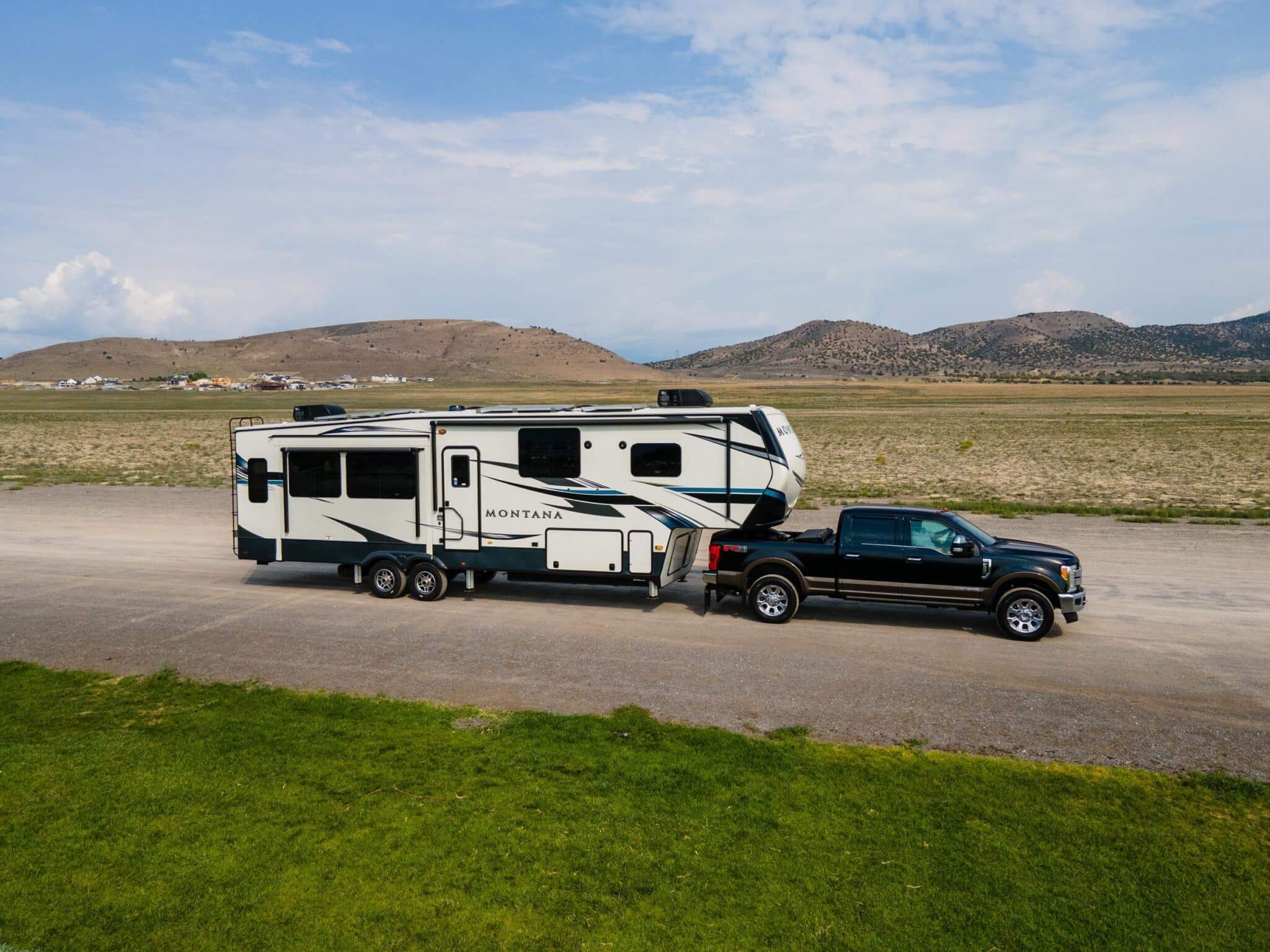
The variety of configurations in this segment is the first challenge dealers face. A customer who says “I need TPMS for my RV setup” could be describing any of a dozen different vehicle combinations, each with a different wheel count and different signal range requirement. The table below covers the most common configurations.
| Combination | Total Wheels | Sensors Required | Repeater |
|---|---|---|---|
| Class C Motorhome + Single-Axle Trailer | 6 | 6 | Recommended |
| Class A Motorhome + Toad (flat tow car) | 8 | 8 | Yes |
| Class A + Dual-Axle Travel Trailer | 8 | 8 | Yes |
| Pickup + 5th Wheel (single axle) | 6 | 6 | Recommended |
| Pickup + 5th Wheel (dual axle) | 8 | 8 | Yes |
| Caravan + Tow Vehicle (Europe) | 6 | 6 | Recommended |
| Twin-Axle Caravan + Tow Vehicle | 8 | 8 | Yes |
| Motorhome + Toad + Trailer (rare) | 10+ | 10+ | Yes + extended |
The pattern is consistent: any combination that extends the vehicle beyond approximately seven metres requires a signal repeater. Any combination with more than four wheel positions requires more than a standard 4-sensor kit. Dealers who do not establish these parameters before recommending a product are setting up a return.
Why Standard 4-Sensor Systems Fail in Towing Configurations
A 4-sensor TPMS kit is designed to monitor four wheels on a single vehicle. When a customer with a Class A motorhome and a towed car fits a 4-sensor system, they are monitoring the motorhome’s four wheels — and providing zero coverage for the four toad wheels trailing behind. This is not a limitation of the technology; it is a misconfiguration that results from not understanding the application.
The second failure mode is range. Even when a customer specifies the correct sensor count for their combination, a system with a 30 or 40-metre wireless range will drop signal from the rearmost sensors on longer setups. This produces intermittent readings that undermine confidence in the system — and generate support calls and returns that are frustrating for everyone involved. The minimum wireless range for any multi-vehicle combination should be 100 metres, with a repeater available for setups at the longer end of the spectrum.
Dealer tip: When a customer describes their RV setup, ask three questions before recommending a sensor count: How many axles does the towed unit have? Is the tow vehicle a standard four-wheel vehicle? Is the towed unit connected directly, or is there a secondary trailer involved? Those three answers determine the correct configuration every time.
The Role of the TPMS Signal Repeater in Long Combinations
The signal repeater is the component that makes multi-vehicle TPMS practical on longer setups, and it is also the component most frequently omitted from initial product recommendations — resulting in a system that works partially but not completely.
A repeater is a small wireless relay device mounted mid-vehicle or on the trailer hitch area. It receives the sensor signals from rear wheel positions, amplifies them, and retransmits them to the cab receiver unit. The effect is to extend the practical wireless range of the system beyond what the sensors can achieve on their own — typically doubling the effective coverage distance.
Rear sensors transmit tire data
Each sensor on the trailer or towed vehicle broadcasts pressure and temperature readings at regular intervals using low-frequency wireless signals.
Repeater captures and amplifies the signal
Mounted mid-combination, the repeater receives transmissions from the rear sensors and re-broadcasts them at a stronger signal level toward the front of the vehicle.
Cab receiver displays all positions
The receiver in the driver’s cab collects data from all sensor positions — including those relayed by the repeater — and displays a complete picture of every wheel on the combination.
Alerts trigger for any position
If any wheel position across the entire combination exceeds or drops below the preset pressure or temperature threshold, the display triggers an audible and visual alert — giving the driver time to respond safely.
For dealers, the practical implication is clear: every 8-sensor sale for a multi-vehicle combination should include a repeater. Bundle them together. A customer who leaves without the repeater and then discovers the rear sensors are unreliable is not a satisfied customer — and the cost of that return and the subsequent re-sale with the correct configuration far exceeds the margin on the initial transaction.
GR-TPMS RV01 + Repeater
The complete solution for RV and trailer combinations. Supports 4, 6, and 8-sensor configurations on a single receiver platform, with a 100m+ wireless range and signal repeater compatibility for extended vehicle lengths. Available for wholesale and OEM supply with CE and FCC certification across all units.
How to Configure a TPMS System for 6, 8, or More Wheel Positions
The configuration process for a multi-vehicle TPMS system follows a simple sequence. The starting point is always the vehicle combination itself — not the product catalogue.
- Count total wheel positions across all vehicles: Include the tow vehicle, the primary trailer or towed vehicle, and any secondary units. Each wheel position requires one sensor.
- Identify the vehicle length: Measure or estimate the total length of the combination from front bumper to rear of trailer. If this exceeds seven metres, a repeater is required.
- Check tow vehicle for OEM TPMS: Most modern pickup trucks and Class A motorhomes have factory-fitted TPMS. If the tow vehicle already has active TPMS monitoring, the aftermarket system may only need to cover the trailer positions.
- Select the appropriate sensor count: Match the sensor count to the number of unmonitored wheel positions. If covering the full combination, use the total wheel count.
- Add the repeater as standard for combinations over seven metres: Do not leave this as a customer decision. Include it in the recommended configuration and explain why during the sales conversation.
- Confirm receiver platform compatibility: All sensors, the repeater, and the receiver should come from the same product family. Mixing components from different suppliers is the most common source of post-installation reliability complaints.
Wholesale Sourcing for RV and Trailer TPMS: What Dealers Need to Stock
A dealer who wants to serve the full range of RV and trailer combination customers needs to stock more than a single sensor kit. The minimum viable inventory for this category covers three sensor counts, a repeater unit, and replacement sensors for the most common configurations.
Sourcing all configurations from a single supplier platform — where the receiver is compatible with 4, 6, and 8-sensor setups without modification — simplifies inventory management and eliminates the risk of sensor-receiver incompatibility. It also makes the sales conversation easier: one product family, one receiver, different sensor counts depending on the setup.
For OEM buyers and larger distributors, white-label options allow the full RV and trailer TPMS range to be supplied under a custom brand. This is particularly relevant for RV rental companies and touring club operators who want a consistent branded product across their fleet. The Grundig Motion auto accessories range supports OEM and private-label configurations — contact the wholesale team at grundig-motion.com for terms and minimum order details.
Summary: Getting the Configuration Right Every Time
The RV and trailer combination segment is one where getting the product specification right matters more than in almost any other TPMS application. An under-specified system does not just fail to impress — it actively misleads the user into thinking they have coverage they do not have.
Count the wheels. Measure the combination length. Confirm OEM TPMS status on the tow vehicle. Recommend the correct sensor count. Bundle the repeater with every extended combination sale. Those five steps eliminate the most common sources of returns and complaints in this category, and they build the kind of customer confidence that generates repeat purchases and referrals.
Stocking TPMS for RV and Trailer Combinations?
Multi-sensor kits and repeater units available for wholesale. CE and FCC certified across all configurations.